Walking in Santa Barbara should feel easy and safe, whether you are heading to the beach, class, work, or a night out. When a car hits a person in a crosswalk, everything changes fast. Suddenly, small details like who had the walk signal, where the lines were painted, and how long the light lasted can matter a lot.
We want to break down how crosswalk right-of-way rules and signal timing can shape who is found at fault after a pedestrian crash. When you understand how these rules work, you are in a better position to protect yourself, protect your claim, and push back if someone tries to blame you for something that was not your fault.
How Crosswalk Rules Shape Your Pedestrian Claim
In late summer, Santa Barbara streets stay busy from early morning to late at night. Tourists are still in town, students are returning, and more people walk to bars, restaurants, and events. All that extra foot traffic means more chances for drivers and walkers to cross paths in risky ways.
In many pedestrian claims, the key question is simple: who had the right to be in the crosswalk at the moment of impact? The answer is not always obvious. It often depends on:
- Whether the crosswalk was marked or unmarked
- What color the traffic signal showed for the driver
- Whether the pedestrian entered on a walk, flashing, or solid do not walk signal
- How much time the signal gave for someone to cross
Those small details can decide whether an insurance company points the finger at the driver, the pedestrian, or both. As a local Santa Barbara personal injury law firm, we see how misunderstandings about these rules can damage a legitimate claim if they are not sorted out early.
When Pedestrians Have the Right to Be in the Crosswalk
Under California law, pedestrians usually have the right-of-way in:
- Marked crosswalks at intersections
- Many unmarked crosswalks at corners where two streets meet
- Typical downtown intersections and crossings near the waterfront
That right-of-way is not a free pass to step in front of a car. Both sides have duties.
Drivers must:
- Slow down when they see someone waiting at a crosswalk
- Stop and let people finish crossing once they are in the crosswalk
- Take extra care in areas with heavy foot traffic, like State Street or beach access points
Pedestrians must:
- Not suddenly leave a curb and move into the path of a car that is too close to stop
- Obey traffic signals where they exist
- Watch for turning cars before stepping into the street
When a crash happens, police and insurance adjusters look closely at who had the legal right-of-way. They examine:
- The exact point of impact in or near the crosswalk
- Statements about the traffic light or stop sign
- Whether the pedestrian was already well into the crosswalk or had just stepped off the curb
For a crosswalk accident attorney in Santa Barbara, those details can be the difference between a strong claim and a denied one.
How Walk Signals and Timing Affect Fault Decisions
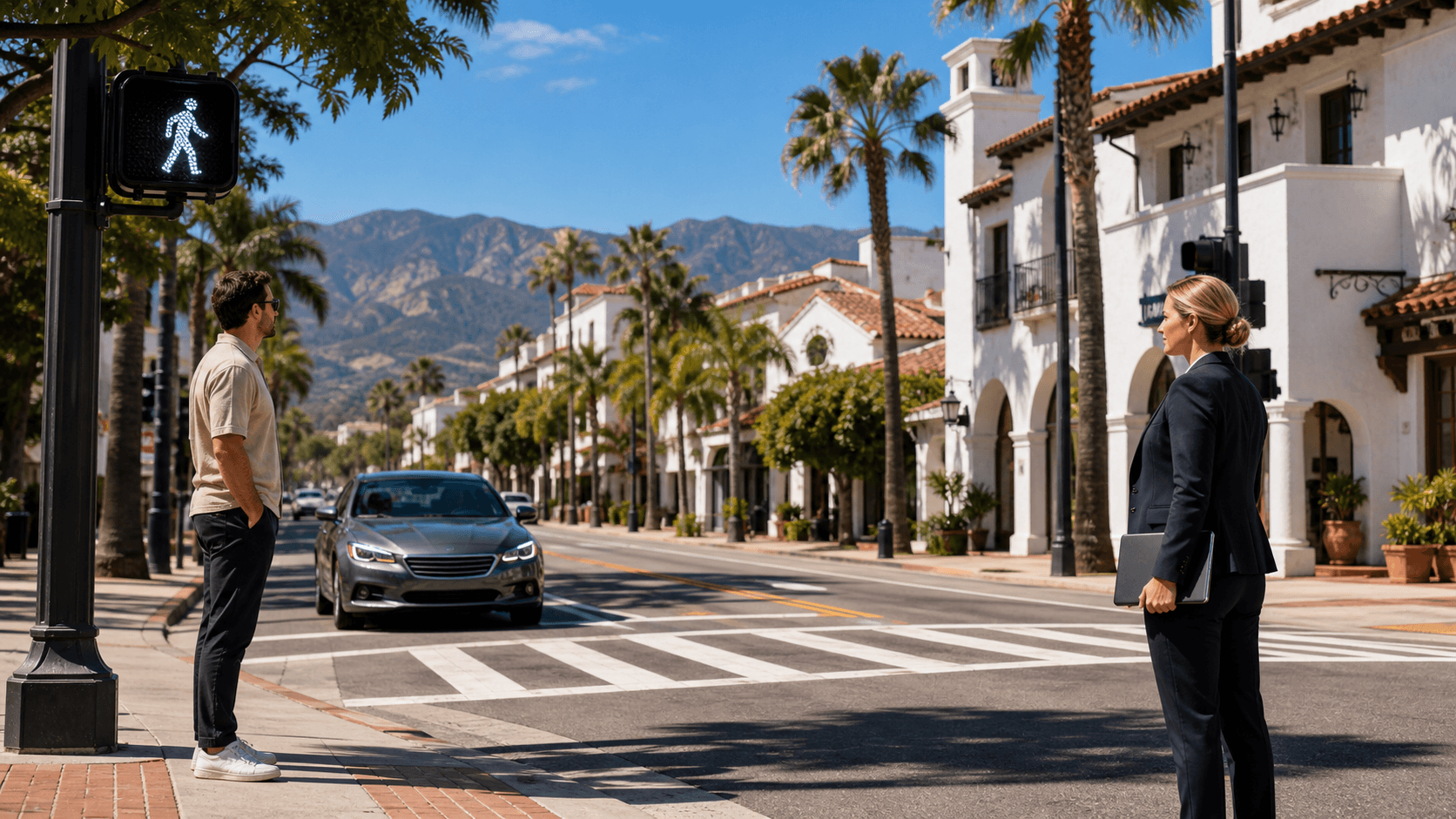
Not all walk signals mean the same thing. At many Santa Barbara intersections, you will see three basic types of pedestrian signals:
- Solid walk: You are allowed to start crossing.
- Flashing do not walk or flashing hand: You should not start crossing, but if you already started, you can keep going to finish safely.
- Solid do not walk: You should not be in the street.
The timing of these signals can get tricky, especially at wide streets or multi-lane intersections. In busy summer months, signals may feel short because so many people are crossing, some slower than others. People using walkers, pushing strollers, or carrying bags may still be in the street when the signal flips to flashing or even solid do not walk.
That does not always mean the pedestrian did something wrong. Many times, the person entered on a lawful walk signal but was still crossing when:
- The countdown ran out
- The traffic light for cars turned green
- Turning drivers hurried to make their light and did not look for someone still in the crosswalk
In these cases, lawyers and safety experts often look for evidence such as:
- Video from traffic cameras or nearby businesses
- Signal timing charts from the city to show how long each phase lasts
- Witness statements about what the lights and signals showed
This kind of evidence helps show whether the person entered the crosswalk legally or was trapped mid-cross by poor timing or driver inattention.
Common Crosswalk Crash Scenarios in Santa Barbara
We see the same kinds of crosswalk crashes again and again around town. Some of the most common patterns include:
- Drivers turning right on red without fully stopping for pedestrians
- Left-turning cars cutting across the crosswalk when a pedestrian has the walk signal
- Vehicles rolling through stop signs near the waterfront or beach paths
- Nighttime incidents near bars and restaurants when visibility and attention drop
There are also shared-fault situations. Both the driver and the pedestrian may have made mistakes, such as:
- A pedestrian looking at a phone and stepping out late in the signal
- Someone crossing mid-block very close to a marked crosswalk
- A driver speeding up to beat a yellow light instead of slowing down
- A driver focusing on other cars and missing the person in the crosswalk
California uses comparative negligence. That means fault can be split. A pedestrian might be found partly at fault yet still recover money for injuries, medical care, and other losses. The amount can be reduced by their share of fault, so it is important to have someone fighting to keep that percentage as low and fair as possible.
Proving What Really Happened After a Crosswalk Accident
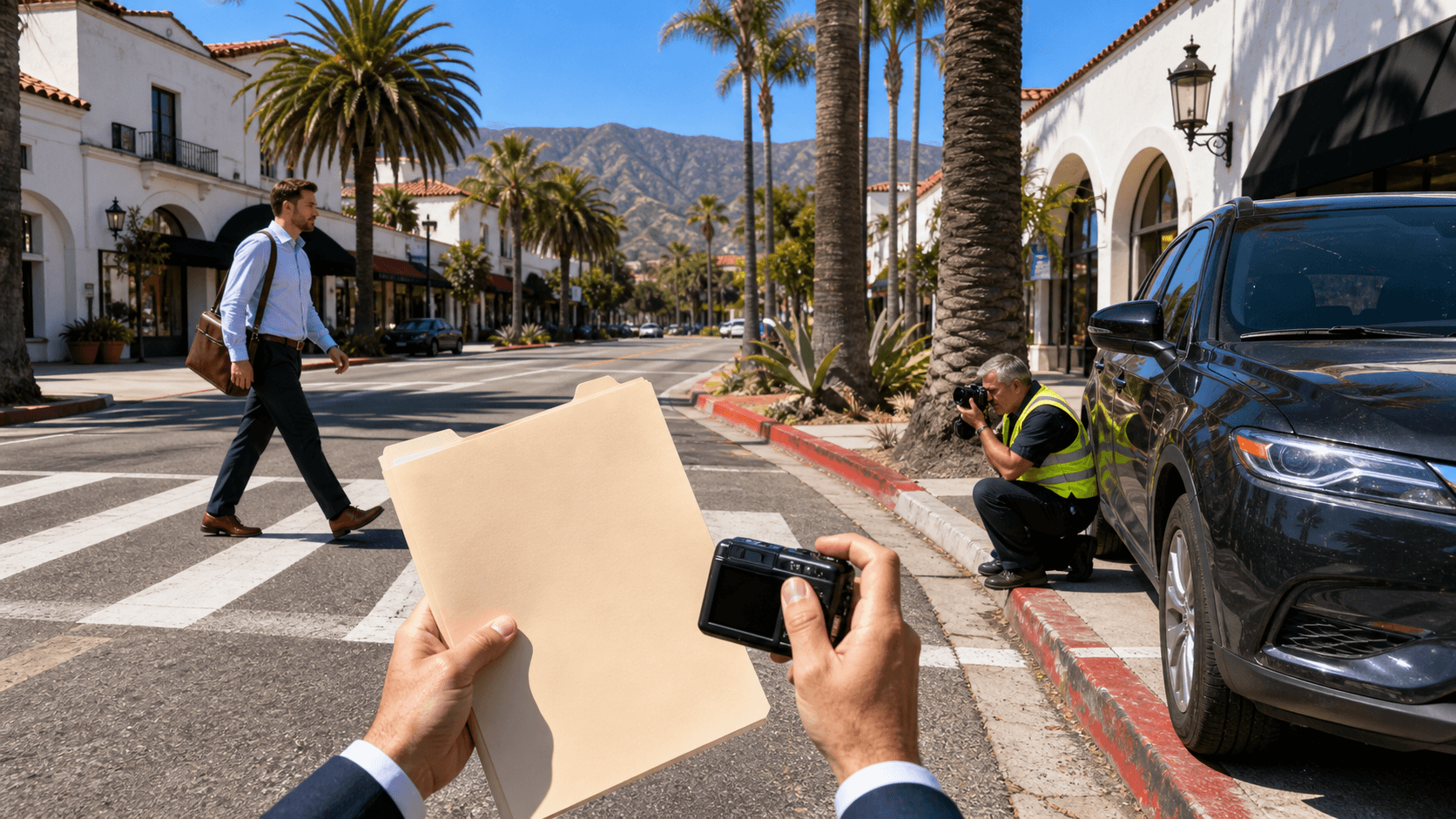
Right after a crosswalk crash, key evidence can disappear fast. A careful legal team will try to act quickly to:
- Secure video from traffic cameras and nearby businesses before it is erased
- Photograph skid marks, traffic signs, and sight lines while they match the day of the crash
- Request data from newer vehicles that may show speed and braking
Physical and digital clues also matter. These can include:
- Medical records that match the way the body was struck
- Damage to shoes and clothing showing where contact happened
- Phone records or app data that help show movement and timing
- Fitness tracker steps and timestamps that can support the pedestrian's version of events
Sometimes, police reports are rushed or based on only one side of the story. A local lawyer who knows Santa Barbara intersections, signal patterns, and usual traffic behavior can point out errors and push back on an insurance story that unfairly blames the pedestrian.
Protect Your Rights After a Santa Barbara Crosswalk Crash
Right after a crosswalk accident, most people feel shaken and confused. A simple checklist can help protect your claim:
- Get medical care right away, even if you think you will be fine
- Report the crash to police so there is a record
- Take photos or video of the scene, signals, vehicles, and your injuries if you are able
- Get names and contact information for witnesses
- Avoid giving detailed statements or accepting blame in casual comments
Many pedestrians assume they were at fault because they were not in a perfect walk phase or did not see the car until the last second. But timing issues, signal patterns, glare from the sun, parked cars blocking views, and driver behavior can all play a part. Your rights do not vanish just because you were not perfect.
At Quirk Accident & Injury Attorneys, we focus on helping injured people in Santa Barbara sort out what really happened in crosswalk crashes and other serious accidents. Understanding crosswalk rules and signal timing is a key part of building a strong claim and standing up to an insurance company that may try to shift blame onto the person who was walking.
Take Confident Next Steps After Your Crosswalk Accident
If you were hit in a crosswalk, you should not have to navigate medical bills, insurance calls, and lost wages alone. As your trusted crosswalk accident attorney in Santa Barbara, Quirk Accident & Injury Attorneys will listen to your story, explain your options, and handle the legal details so you can focus on healing. We are ready to evaluate what happened, preserve crucial evidence, and pursue the full compensation you may be entitled to. Reach out today through our contact page to schedule a free, no-obligation consultation.