Local Hazards That Turn Santa Barbara Walks Into Injury Claims
Walking around Santa Barbara should feel safe. We have oceanside paths, shady neighborhoods, and lively downtown blocks that invite people to get out of the car and move on foot. But even a simple walk to grab coffee or watch the sunset can change in a second when a hidden hazard causes a serious injury.
We help people after those walks go wrong. When sidewalks, parking lots, or beachfront paths are not kept safe, or when drivers fail to watch for people on foot, injured walkers often end up stuck between medical bills and insurance companies. Knowing the most common local risks and when it makes sense to talk with a walking accident attorney in Santa Barbara can make a real difference for your health, your rights, and your future.
Spotting Everyday Dangers on Santa Barbara Walks
Santa Barbara is built for walking. Locals and visitors spend time on:
- Sidewalks through older neighborhoods and business corridors
- Beachfront paths and promenades along the water
- Downtown State Street and nearby side streets
- Campus walkways and student housing areas
The problem is that danger does not always look obvious. A raised crack in the pavement, a driver checking a text instead of the crosswalk, or a dim stairway light can all lead to the same thing: a bad fall or a sudden impact.
A short, relaxed walk can quickly turn into:
- Sprained or broken ankles from uneven ground
- Head or back injuries from hard falls
- Serious injuries when cars or bikes hit someone in a crosswalk
When that happens, injured people often find that insurance companies try to shift blame, downplay pain, or ignore how the injury changes daily life. That is when having clear information, photos, and legal guidance becomes very important.
Sidewalk Traps and Street Obstructions That Cause Falls
Sidewalks around Santa Barbara may look charming, but they are not always safe. Age, tree roots, and patchwork repairs leave many walkways:
- Cracked, with sudden changes in height
- Tilted or sloped toward the street
- Broken at the edges near curbs and driveways
These problems are common in older residential areas and near the waterfront where roots and moisture affect the pavement. A toe catches a raised edge, or a walker steps sideways on a slope, and the next step is a trip and fall.
Downtown, the danger often comes from clutter instead of cracks. Sidewalks can be crowded with:
- Scooters, rental bikes, and e-bikes left across walking lines
- Café seating and planters that shrink the safe path
- A-frame signs, racks, and displays
- Construction materials and temporary ramps
When the clear walking space disappears, people are more likely to step into the street, stumble over something low to the ground, or twist a knee avoiding an obstacle.
Who is responsible for these hazards can depend on where the problem sits. It might be:
- A private property owner
- A business that spreads too far onto the sidewalk
- The city or another public agency
If you fall, it helps to:
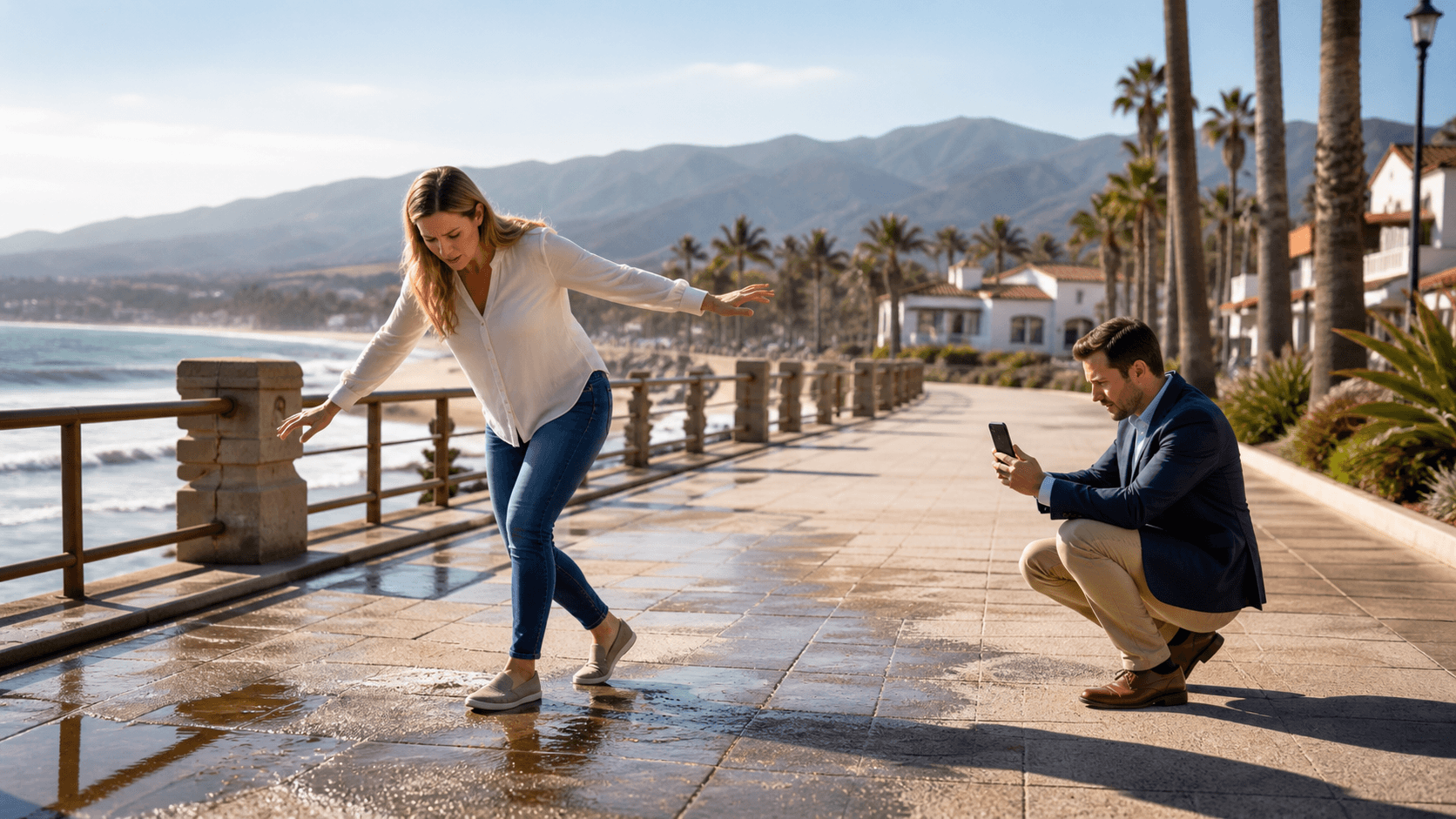
- Take photos of the exact spot from several angles
- Capture nearby buildings, signs, and any business entrances
- Note the time of day and any weather or visibility issues
Speaking with a walking accident attorney in Santa Barbara after a fall can help you understand who may be at fault and what steps to take next.
Coastal Path and Beachfront Risks During Fall Tourist Season
Late September still feels like peak beach season here. Coastal paths along Cabrillo Boulevard and the nearby boardwalks can be packed with people enjoying the water and events. On a single stretch of path, you might see:
- Pedestrians walking in groups
- Joggers passing on the left
- Cyclists and rental e-bikes moving at higher speeds
- Families with strollers and beach carts
When all of this mixes together, one sudden stop or sharp turn can cause walkers to be knocked over or forced off the path.
This time of year also brings different conditions. The sun sets earlier, so evening walks that used to be in full light now happen in lower light. Coastal fog, morning dew, and sand tracked across stairs and ramps can leave surfaces slick. A simple step off a wet curb can lead to a serious fall.
If you are hurt on a beachfront walk, try to:
- Get medical help as soon as you can, even if pain feels mild at first
- Ask for names and contact details of anyone who saw what happened
- Report the incident to lifeguards, security, or property staff if they are nearby
- Take photos of the hazard and the wider area
Many coastal spaces are shared by several groups, like the city, nearby businesses, and event organizers. A lawyer can sort through who controlled what area, and who may bear legal responsibility for the unsafe condition.
Crosswalk, Parking Lot, and Intersection Hazards
Street crossings are one of the most dangerous spots for people on foot. Pedestrian crashes in crosswalks and intersections often happen because drivers:
- Speed up to beat a light
- Fail to yield when a person has the walk sign
- Turn right on red without looking for walkers
- Look at phones, GPS screens, or in-car displays
Even when a person steps into the street with the signal in their favor, a distracted or impatient driver can cause sudden-impact injuries.
Parking lots bring a different kind of risk. At shopping centers, restaurants, and event venues, we often see:
- Faded arrows and crosswalk markings
- Confusing entry and exit routes
- Limited lighting after dark
- Drivers backing out fast without checking mirrors
California law gives pedestrians important rights, but those rights often get argued over after a crash. Helpful evidence can include:
- Video from nearby cameras or dashcams
- Skid marks, broken glass, or debris on the ground
- Photos of vehicle damage and where the person was hit
Insurance companies sometimes try to blame the injured person, saying they were distracted or "came out of nowhere." Involving a walking accident attorney in Santa Barbara early can help protect your side of the story and preserve key proof.
Hidden Nighttime Hazards and Poor Lighting Issues
Many serious walking injuries happen at night when hazards hide in the dark. Around apartment complexes, hotels, alleys, and campus walkways, poor lighting can make it hard to spot:
- Potholes and broken pavement
- Cracked or loose steps
- Missing or wobbly handrails
- Uneven curbs and surprise drop-offs
As fall brings earlier evenings and more night events, people are going out to dinner, shows, and classes when it is already dark. If property owners ignore broken lights, do not replace burned-out bulbs, or fail to warn about damaged walkways, guests and tenants can pay the price instead.
This is often a premises liability issue. That means the focus is on whether the person or company that controls the property took reasonable care to keep walkways safe.
If you are hurt in a dim area, try to document right away:
- How bright or dark it was, including nearby light sources
- Any missing bulbs, broken fixtures, or blocked lights
- Lack of warning cones, tape, or signs around damaged spots
Photos taken soon after the injury can help show how poor lighting turned a simple step into a serious fall.
Protect Your Rights After a Walking Accident
If you were hurt while walking in Santa Barbara, you do not have to navigate insurance and legal issues on your own. At Quirk Accident & Injury Attorneys, we can explain your options, gather evidence, and pursue the compensation you need to move forward. Speak with a dedicated walking accident attorney in Santa Barbara so we can evaluate your case and outline the next steps. To schedule a free consultation, simply contact us today.