Slip and fall accidents on unsafe property can flip your life upside down in a few seconds. One moment you are walking through a grocery store after the fall rains, across a shiny hotel lobby during holiday travel, or along a crowded shopping center before the winter season, and the next you are on the ground in pain. What you do in the minutes, days, and weeks after that fall can strongly affect your injury claim.
We want to walk you through how these cases really work in San Diego. We will talk about what unsafe property means under California law, how a slip and fall claim usually moves forward, which evidence matters most, how fault is shared, and why having a local unsafe property attorney in San Diego can help protect your rights.
How to Protect Your Rights After a Slip and Fall
Slip and fall cases are rarely as simple as they first appear. Property owners and their insurance companies often try to shift blame, argue that you were careless, or say they had no way to know about the hazard. You may be dealing with pain, missed work, and medical visits while they focus on protecting their bottom line.
Right after a fall, it helps if you can:
- Report the incident to the manager or owner
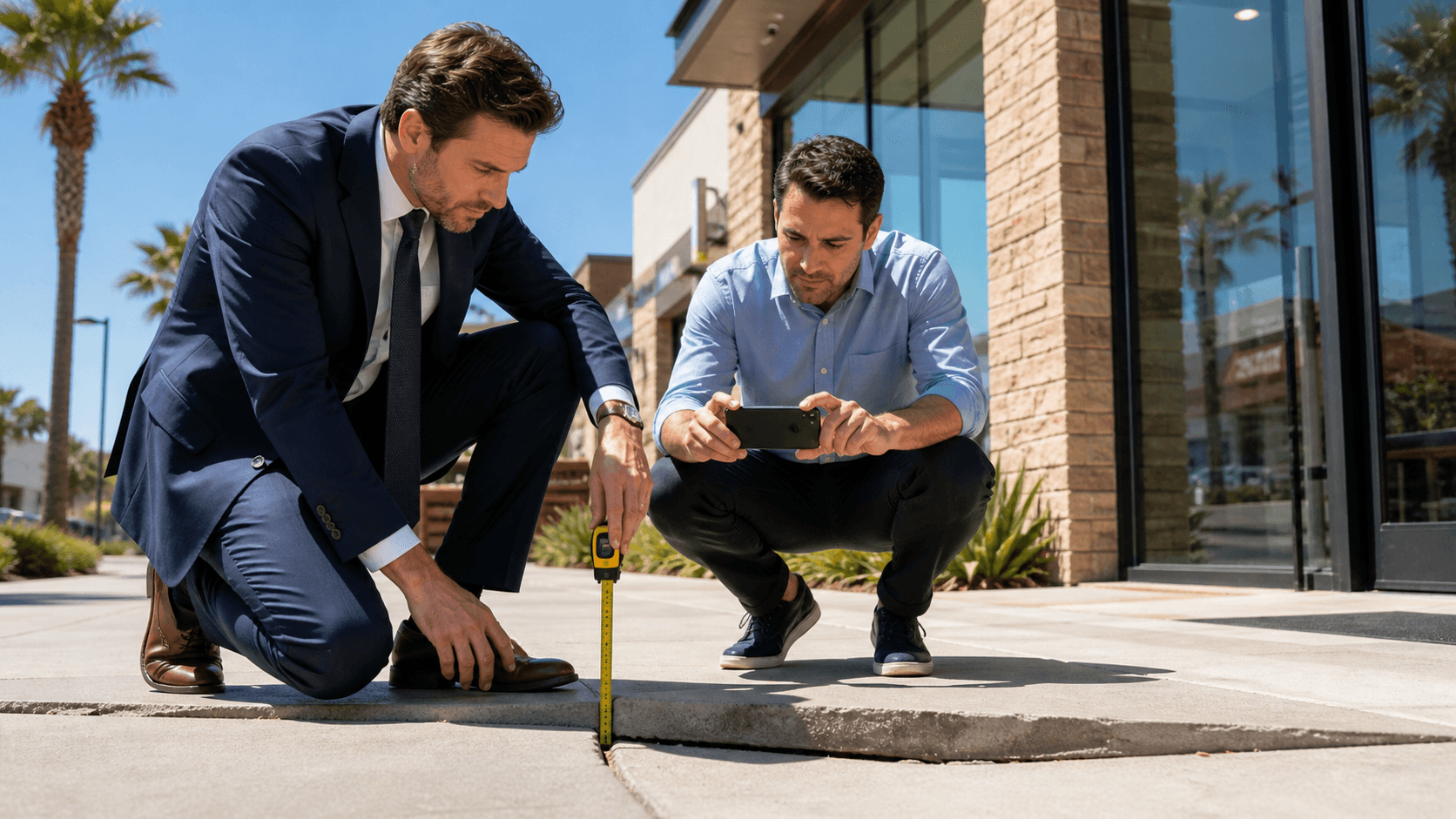
- Take photos or video of the area and your injuries
- Get names and contact information for witnesses
- Keep any shoes or clothing you wore that day
Quick medical care is also important. It helps you heal and creates a record that connects your injuries to the fall. From there, the claim process starts to build. That is where understanding what counts as unsafe property really comes in.
What Counts as Unsafe Property in San Diego
Unsafe property usually means a condition that creates an unreasonable risk of harm. In everyday terms, that can look like:
- Wet floors without warning signs
- Broken or missing handrails on stairs
- Poor lighting in hallways, parking lots, and stairwells
- Loose rugs, cords, or clutter in walkways
- Slick outdoor walkways after seasonal rains or overwatering
Under California premises liability law, people who own, control, or manage property generally have a duty of care. They are expected to keep their property reasonably safe, fix hazards within a reasonable time, or warn about dangers that are not obvious.
Those who might be responsible can include:
- Property owners and landlords
- Store managers and commercial tenants
- Homeowners
- Contractors or maintenance companies that handle cleaning or repairs
A key idea is whether they knew or should have known about the danger. If a spill sat on the floor for a while or a step had been broken for days, it is easier to argue they had a fair chance to fix it or warn you. If they should have expected that danger to happen, that can matter too.
Inside a Slip and Fall Claim Timeline
Every case is different, but many slip and fall claims follow a similar path. It often starts with you focusing on your health. That means:
- Getting medical treatment and following your doctor's advice
- Reporting the incident to the business, landlord, or property owner
- Keeping copies of medical records, bills, and time missed from work
Next, there is usually an insurance claim. The property owner or business often turns your claim over to their insurance company. The insurer may:
- Ask for statements
- Review medical records
- Inspect the property
- Look at any photos, video, or witness information
There are important time limits. California law gives you a limited window to file a lawsuit for an injury claim. If your fall happened on government property, such as a public sidewalk or transit center, there can be a much shorter deadline to give notice. Missing those deadlines can cost you your chance to bring a case.
Season and setting can also affect proof. Busy holiday shopping in San Diego can mean surveillance video gets recorded over quickly. Stores may clean more often and toss out logs. Witnesses, like seasonal workers or travelers, may be harder to track down later. That is why early action can make such a difference.
Evidence That Can Make or Break Your Case
Strong evidence often separates a successful claim from a denied one. Helpful items can include:
- Photos and video of the hazard and surrounding area
- Incident reports made with the store, hotel, or landlord
- Names and statements of witnesses
- Medical records and doctor notes
- Proof of lost income and other out-of-pocket costs
An unsafe property attorney in San Diego can help protect and build that evidence. For example, they may send letters asking the property owner to keep security footage, request cleaning and maintenance records, or work with safety experts who can explain why the condition was dangerous.
Property owners and insurance companies may argue that:
- You were not watching where you were going
- The danger was open and obvious
- The hazard appeared only moments before your fall
Good evidence, gathered early, can push back on these arguments. Clear photos, honest witness statements, and records showing how long the problem existed are powerful tools.
How Fault Is Shared Under California Law
California uses a pure comparative negligence rule. That means fault can be shared between you and the property owner. Your compensation can be reduced by your percentage of fault, but it is not wiped out unless you are found to be fully at fault.
Common blame arguments include:
- You were looking at your phone while walking
- Your shoes were slippery or not suited for the surface
- You ignored cones, signs, or taped off areas
Here are a few simple examples:
- You slip on a grocery store spill with no warning cones in a busy aisle
- You miss a step on a dim apartment stairway where the light is out
- You trip on uneven sidewalk slabs near a tourist spot with heavy foot traffic
In each situation, an insurer might say you should have been more careful. An attorney's job is to show what the property owner could and should have done differently, and to keep your percentage of fault as low as the facts support.
Why a Local Unsafe Property Attorney Matters
Slip and fall cases on unsafe property in San Diego have their own local flavor. Malls, hotels, beachfront properties, office buildings, and apartment complexes often repeat the same patterns. A local unsafe property attorney in San Diego is familiar with area courts, judges, juries, and the way many local businesses and landlords handle injury claims.
At Quirk Accident & Injury Attorneys, we focus on early investigation. We gather records, talk with witnesses when memories are fresh, and work with medical and safety experts when needed. We prepare cases from the beginning as if they might go to trial, even if they later settle.
For clients, that approach can ease a heavy load. While you focus on healing, an attorney can handle insurance pressure, keep track of important deadlines, and help you understand how your medical needs and future care fit into your claim. Slip and fall cases can feel stressful and confusing, but you do not have to work through them on your own.
Protect Your Rights After An Unsafe Property Injury
If you were hurt because of a dangerous condition on someone else's property, Quirk Accident & Injury Attorneys is ready to help you understand your options and pursue compensation. Speak with an experienced unsafe property attorney in San Diego who can evaluate your case and explain your next steps. We will investigate what happened, deal with the insurance company, and work to hold the responsible parties accountable. To get started, reach out and contact us for a free consultation.